
Secondary menu

  • About Us
  • News & Stories
  • Translated Materials
Minnesota Department of Health logo
  • Data, Statistics, and Legislation

    Data, Statistics, and Legislation

    Statistical reports, health economics, policy, and legislation.
    Data, Statistics, and Legislation
    • Community Health
    • Diseases and Conditions
    • Environmental Health
    • Health Behaviors and Risk Factors
    • Health Care Cost and Quality
    • Reporting and Exchanging Data
    • Legislation and Policy
  • Diseases and Conditions

    Diseases and Conditions

    A-Z disease listing, diseases and conditions by type.
    Diseases and Conditions
  • Health Care Facilities, Providers, and Insurance

    Health Care Facilities and Providers

    Directories of facilities, professional certifications, health insurance and patient safety.
    Health Care Facilities and Providers
    • Facility Certification, Regulation and Licensing
    • Insurance
    • Health Information Technology
    • Provider Certifications, Licenses, Registrations and Rosters
    • Patient Health and Safety
    • Health Care Homes
    • Notices Related to Health Records
    • Rural Health and Primary Care
    • Trauma System
  • Healthy Communities, Environments, and Workplaces

    Healthy Communities, Environments, and Workplaces

    Indoor air and drinking water quality, community prevention and emergency preparedness.
    Healthy Communities, Environments, and Workplaces
    • Community Wellness and Health Equity
    • Healthy Schools and Child Care
    • Healthy Businesses and Workplaces
    • Local Public Health
    • Environments and Your Health
    • Safety and Prevention
    • Emergency Preparedness and Response
    • Equitable Health Care Task Force
    • Transforming the Public Health System in Minnesota
  • Individual and Family Health

    Individual and Family Health

    Birth records, immunizations, nutrition and physical activity.
    Individual and Family Health
    • Vital Records and Certificates
    • Disabilities and Special Health Needs
    • Disease Prevention and Symptom Management
    • Healthy Aging
    • Healthy Children, Youth and Adolescents
    • Mental Health and Well-being
    • Reproductive Rights and Protections in Minnesota
    • Women and Infants
MDH Logo

Breadcrumb

  1. Home
  2. Healthy Communities, Environment and Workplaces
  3. Environments and Your Health
  4. Radiation Control
  5. X-ray Program
Topic Menu

X-ray

  • X-ray Home
  • Laws and Rules
  • Quality Control
  • Registration
  • Service Provider
  • Topic Index
  • X-ray Operator

Facility Pages

  • Chiropractic
  • Dental
  • Industrial
  • Medical
  • Veterinary

Radiation Control

  • Home
  • Contact Us
  • Radioactive Materials
  • Industrial Radiographer

Environmental Health Division

  • EH Division Home

X-ray

  • X-ray Home
  • Laws and Rules
  • Quality Control
  • Registration
  • Service Provider
  • Topic Index
  • X-ray Operator

Facility Pages

  • Chiropractic
  • Dental
  • Industrial
  • Medical
  • Veterinary

Radiation Control

  • Home
  • Contact Us
  • Radioactive Materials
  • Industrial Radiographer

Environmental Health Division

  • EH Division Home
Contact Info
X-ray Unit
651-201-4545
health.xray@state.mn.us

Contact Info

X-ray Unit
651-201-4545
health.xray@state.mn.us

Screen Contact Test

Without good contact between the film and screens of the cassette, detail will be lost on the radiograph. Therefore, it is necessary to routinely perform a screen contact test on all of your cassettes. Screen contact tests are required at intervals not to exceed 24 months, per Minnesota Rule Chapter 4732.1100.

Equipment needed for general radiography
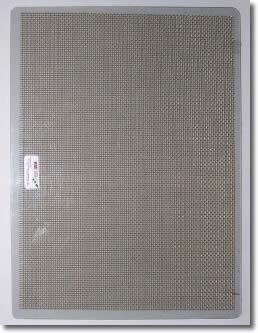
Screen Print image.

  • No significant areas of poor contact as measured by no less than: (1) 8 wires/inch mesh; or (2) 7 holes/inch for regular film; (3) 40 wires/inch mesh or greater for mammography film.
  • These test tools are generally encased in acrylic for ease of handling
  • Densitometer (if available)

Frequency of test

At intervals not to exceed 24 months

Procedure

  • Ensure that cassettes to be tested have been allowed to sit for at least 15 minutes after loading. This will allow for any trapped air to dissipate.
  • Place a loaded cassette on top of the x-ray table and place the wire mesh on top of the cassette.
  • Select a standard focal film distance (usually 40") and center the x-ray beam to the cassette. (Dental pan cassettes may need a greater distance to cover the full cassette.)
  • "Cone down" or restrict the primary beam to the outside edges of the cassette.
  • Identify the cassette with lead numbers or letters corresponding to the I.D. on the screen inside. (All screens need identifying marks; e.g., numbers or letters that show up on each radiograph. This enables you to identify which cassette has a problem when one is observed.)
  • Select a technique that will produce an optical density of approximately 2.0 on the developed film. For a 400 speed film-screen combination a technique of 65 kVp and 5 mAs is a starting point. Finding a technique to produce the 2.0 (± 0.5 O.D.) may take some trial and error. Remember that cassettes of a different speed (e.g., extremity) will require a different exposure.
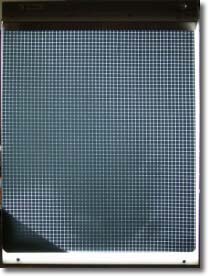
  • Screen Print image.Record for future use the technique that produced the appropriate optical density on the film, the room used, and focal-film-distance used.
  • Label, expose and process the film from each cassette.
  • View each film on a view box in a dimly lit room from a distance of approximately six feet or more.
  • Look for areas that are darker and/or more blurry than the rest of the film. This indicates poor contact. Do not try to identify poor contact by closely looking for fuzzy wires on the film.
  • Areas of poor contact need to be evaluated as to their land size. An area of poor contact extending less than an inch from the edge into the film may not be a problem depending on the type of radiographs you take. If the area of poor contact could obscure important information on a radiograph, remove the cassette from service.

Go to > top

Tags
  • environment
Last Updated: 10/15/2024
  • Facebook
  • X
  • Instagram
  • LinkedIn
  • Youtube

About MDH

  • About Us
  • Grants and Loans
  • Advisory Committees

Legal & Accessibility

  • Privacy Policy
  • Equal Opportunity
  • Feedback Form

Careers at MDH

This is an official website of the State of Minnesota. Visit Minnesota.gov for more information.