
Healthy Places
Related Topics
- Healthy Homes
- School Health
- Healthy Eating
- Physical Activity
- Air Quality
- Water Contaminants
- Climate & Health
Environmental Health Division
Brownfields and Public Health
Brownfields are abandoned, idled, or underused industrial and commercial properties where financing expansion or redevelopment is complicated by actual or suspected environmental contamination as a result of past uses. For example, a dry cleaning business may have disposed of chemical solvents down the drain, contaminating the groundwater. Or, older buildings may have been constructed with asbestos containing materials like pipe insulation which is a serious health hazard when disturbed during demolition or renovation.
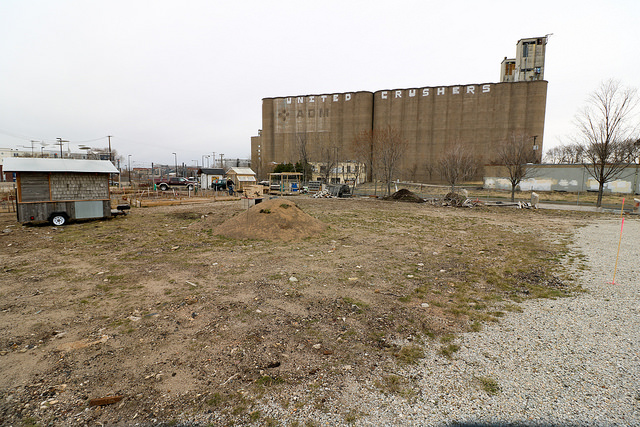
Brownfield Redevelopment
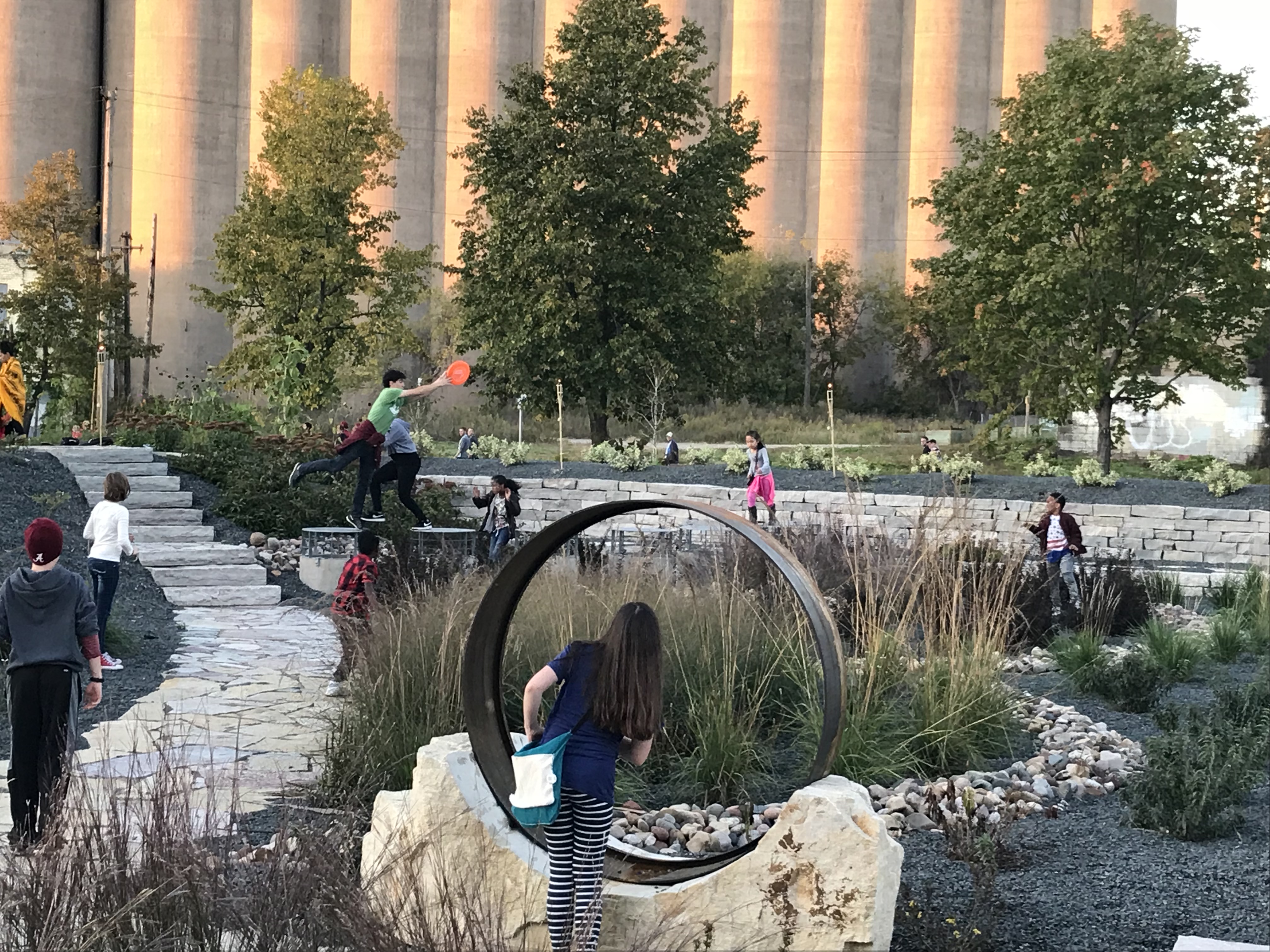
Towerside District Stormwater System, Minneapolis MN
The Towerside District Stormwater System project was constructed across 8 acres including several brownfield sites with former industrial uses and serves as an excellent example of the environmental, economic, and social benefits of transforming brownfield sites. In addition to cleaning stormwater runoff before it enters the Mississippi River, the Mississippi Watershed Management Organization’s artful stormwater park is used for passive recreation by local residents in the growing Towerside neighborhood of Minneapolis.
There are more than 10,000 brownfield sites across Minnesota due to the presence or potential presence of a hazardous contaminant. Brownfield sites are often found in economically distressed areas, typically concentrated in urban locations, but also found in prime downtown and waterfront locations in nearly every community throughout the state.
Brownfields can indirectly impact public health in many ways, from taking a toll on community cohesion and morale due to the presence of abandoned buildings in otherwise well-maintained neighborhoods to posing a local economic burden, especially in low-income neighborhoods that suffer from a disproportionate number of brownfield sites. Brownfields can also directly impact public and environmental health due to contamination that can pollute soil, air, and water resources on- and off-site. People might be exposed to these hazards by walking on the site, by wind carrying contamination off of the site, or by drinking groundwater affected by the site. This can occur before, during, or after redevelopment.
Redeveloping brownfields is good public health practice. Revitalizing brownfield sites can improve public health by preventing exposure to hazardous substances, offering an opportunity to bring people and jobs back to areas, resolving neighborhood blight, increasing community connectivity, restoring ecological balance, reducing the effects of urban heat islands, and promoting physical activity and recreation. The Minnesota Department of Health (MDH) is one of several state agencies that may play a role in brownfield assessment and redevelopment efforts.
MDH can be requested to evaluate brownfields by citizens, local governments, other state agencies or the U.S. Environmental Protection Agency. We work with stakeholders to ensure that investigations and cleanups consider and address public health concerns.
- Tools, Education, and Resources:
MDH provides communities, planners, developers, health care professionals, and others with education, tools, and resources related to brownfield redevelopment. For example, MDH recently developed a Brownfield Health Indicator Tool in partnership with Minnesota Brownfields to help focus brownfield redevelopment project decision-making on health.
Designed for use as a self-guided Tool, brownfield project influencers (planners, developers, land owners, other professionals, and community leaders) are encouraged to utilize the Tool's framework as a complimentary process to support existing brownfield redevelopment project scoping and assessment activities. The Tool can be leveraged to help identify potential community health risks, assess the project’s proposed benefits, engage with project stakeholders, and prioritize long-term redevelopment and health co-benefits.
Brownfield and Health Indicator Tool (PDF)
Brownfield and Health Indicator Tool (EXCEL)
- Technical Assistance and Guidance:
MDH can provide recommendations about the redevelopment of contaminated land that includes residential buildings, parks, childcare centers, and schools to ensure that sensitive populations are protected. When brownfields are in or near residential communities and the contamination is above health-based criteria, MDH can provide technical assistance. The MDH Site Assessment and Consultation (SAC) Unit is often involved when there are unusual contaminants or routes of exposure.
MDH involvement with brownfields can also include evaluating chemical toxicity and developing safe exposure levels for the general public, establishing Special Well Construction Advisories in areas with known groundwater contamination, and implementing prevention activities targeted at asbestos, mold, lead and radiation.
The Site Assessment and Consultation (SAC) Unit at MDH can be requested to evaluate brownfields by citizens, local governments, other state agencies or the US Environmental Protection Agency. The SAC Unit works with stakeholders to ensure that investigations and cleanups consider and address public health concerns.
Please see our Contact Us page if you’d like to speak with an MDH representative specifically about brownfields and health.
For general information on brownfields in Minnesota, contact the Voluntary Investigation and Cleanup Program (VIC) at the Minnesota Pollution Control Agency at (651) 296-7291 or see the MPCA Brownfields web page.
For more information about brownfield cleanup, reuse, financing, or service providers, visit the Minnesota Brownfields web site.