
2024 Public Health Laboratory Annual Report
New Construction Resolves Long-Running Problems
 More than 20 years ago, the building occupied by the Public Health Laboratory (PHL) and the Minnesota Department of Agriculture (MDA) was specially built to house the testing of samples for many substances, some of which are very dangerous. For budget reasons, however, some elements were left unfinished. Also, the building has not kept up with the demands made by dramatic changes in the technologies and techniques used in testing.
Within the last few years, money from bonds and other sources has been available to finish the building and update it for contemporary testing needs. A vital funding source was the money provided by the federal government in connection with the COVID-19 pandemic. This funding was used for many long-overdue initiatives aimed at preventing and combating all kinds of infectious disease, beyond just COVID-19.
Many of the improvements, such as a new airflow system, were covered in last year’s annual report article. Here are a few more recent projects that have improved the PHL’s ability to keep Minnesotans safe:
Laboratory improvements
Rapid advances in molecular research have led to many improved methods of diagnostic testing for infectious disease. The primary instrument for such testing is the real time polymerase chain reaction (PCR) machine. Lab space was reconfigured to accommodate the PCR machines.
The project has also made more room for the relatively new Sequencing and Bioinformatics Unit of the Infectious Disease Laboratory. The unit sequences the genomes of pathogens to provide vital information about emerging diseases, changes to viruses, etc., to the Centers for Disease Control and Prevention (CDC) and other organizations.
 Another important goal of remodeling the laboratory was to move viral testing into biosafety level 3 (BSL-3) spaces, the most secure in the building. After the 2022 mpox epidemic, management concluded that the highest level of precaution was necessary to keep scientists safe from possible exposure to unknown viruses.
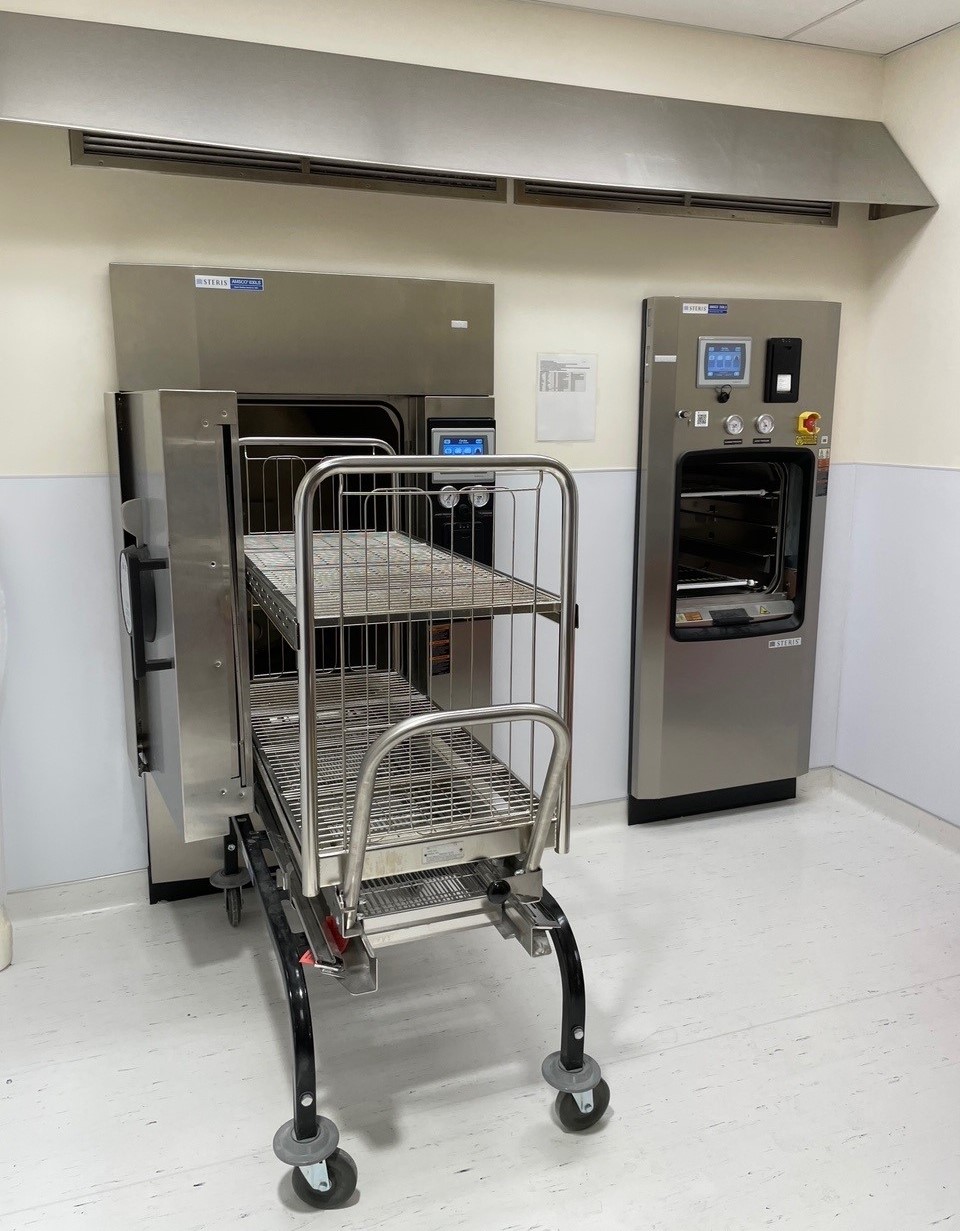
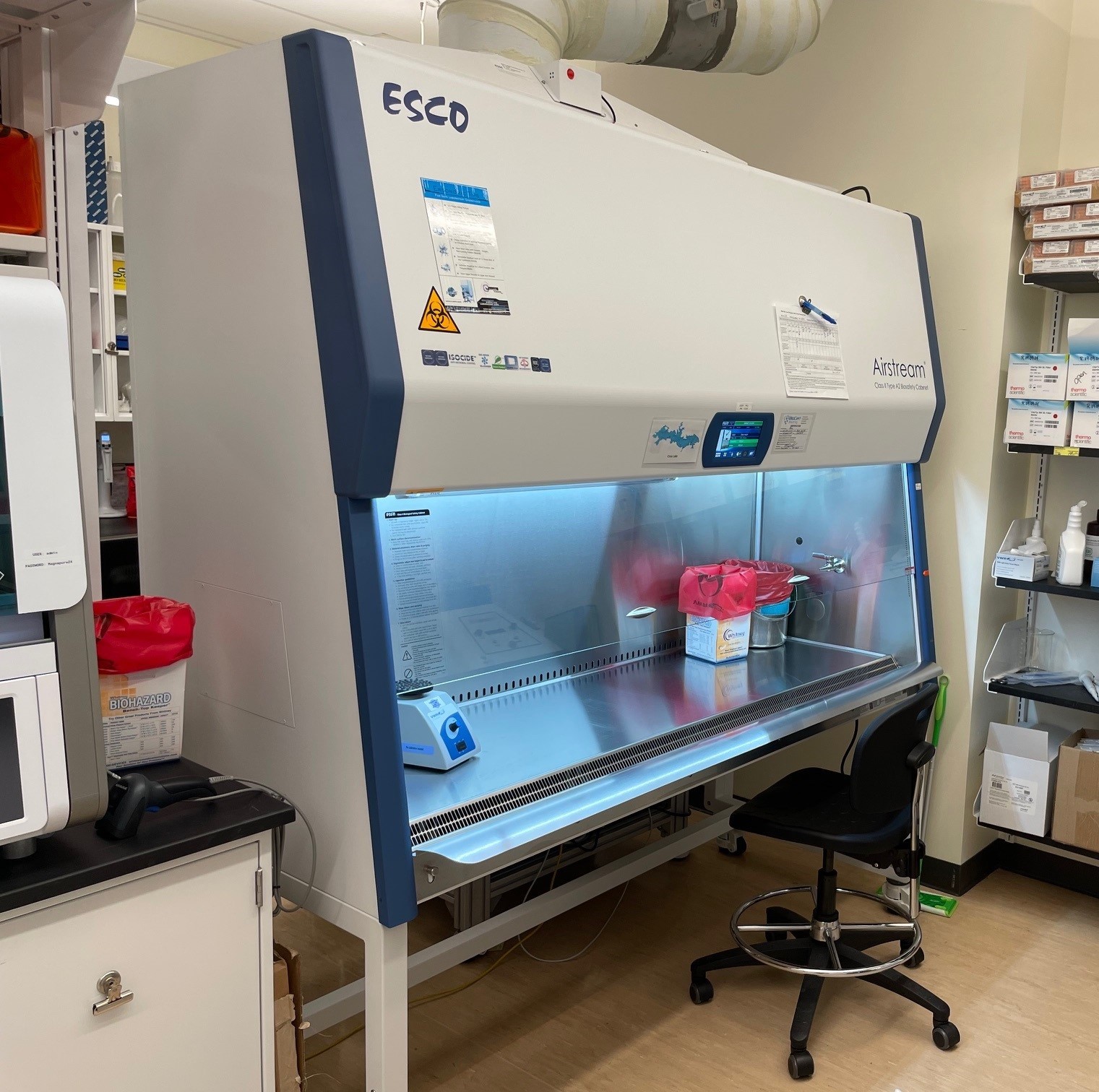
The laboratory improvements project also included installing new autoclaves (pictured, above) for sterilizing laboratory equipment, along with replacing biosafety cabinets (pictured, left) which were past their recommended lifespans. PHL scientists use biosafety cabinets every day to work with materials that are potentially infected with pathogens.
Deionized water tank replaced
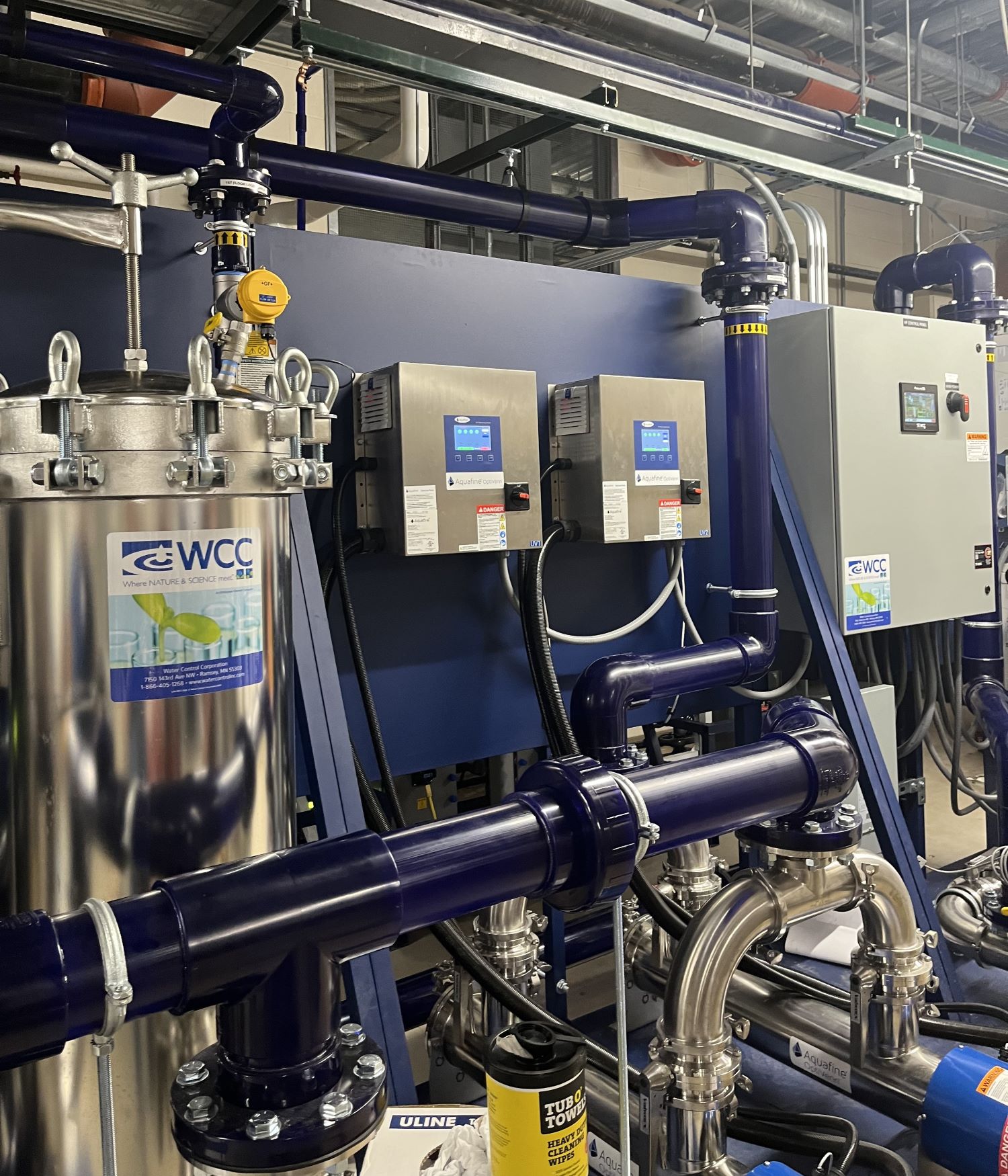 The Public Health Laboratory needs deionized water, which is water made as pure as possible by stripping out almost all dissolved minerals. In the past, the lab’s deionized water system has been problematic. It produced water that barely reached the highest level of water quality, Type 1. For many functions, the lab had to buy water from other sources. The system had no redundancies, meaning that any breakdowns or maintenance would shut down the flow of deionized water.
In 2024, a new deionized water system (pictured, right) was installed. It improves water quality significantly, eliminating any need to buy other water. It also had built-in redundancies to keep the supply of deionized water constant.
The PHL is devoted to accurately and efficiently testing thousands of samples per year for environmental contaminants, infectious disease pathogens, and newborn health conditions. With the recent construction projects, the division has ensured it will do so with the highest standards of quality and safety.
Return to the main 2024 Annual Report page.