
2023 Public Health Laboratory Annual Report
Mpox, Ebola Threats Rise and Fall
Effective disease surveillance and rapid laboratory diagnosis allows for quick detection and response
The COVID-19 pandemic heightened public attention on infectious disease in general. So far, no other disease has proven as devastating, thanks both to the varying traits of the diseases and the United States’ robust health infrastructure, which includes the Minnesota Infectious Disease Laboratory.
Mpox
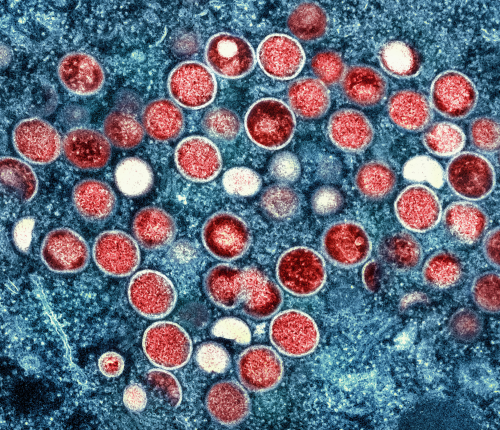 In May 2022, the United States experienced a surge in mpox (formerly known as “monkeypox”) diagnoses. Mpox is a viral disease spread among humans and animals that is endemic in Central and West African countries but rarely found elsewhere in the world.
Though the mpox and smallpox viruses are in the same genus, Orthopoxvirus, an mpox infection is much less severe. (Neither is related to chicken pox.) The typical symptoms of the mpox variant diagnosed in the United States are a painful rash and mild flu. It is very rarely fatal.
Doctors, however, were caught unprepared for the disease. Most had only read about orthopoxviruses in medical school. The Infectious Disease Laboratory became the go-to resource for medical professionals unsure of how to collect samples.
First Mpox Testing in Minnesota
In coordination with the CDC, the Infectious Disease Laboratory became the first to test for mpox in Minnesota. By mid-July 2022, the lab was receiving around 50 samples per day, six days a week. Each day, a handful of samples would test positive for mpox.
After a peak of positive mpox test results in August, the lab saw a sudden drop-off in mid-October. Since Nov. 5, 2022, only a handful of cases have been confirmed in Minnesota. View data about the mpox outbreak.
A full analysis is underway to determine why the threat of mpox has apparently passed. Some credit must go to the Public Health Laboratory’s dissemination of information about the disease. Communities affected by mpox curtailed dangerous behaviors and learned about and received the vaccine. The building housing the Public Health Laboratory became the first mpox vaccine clinic in the state.
Ebola
Another disease that made headlines in 2022 was Ebola. On Sept. 20, the Ugandan government declared an outbreak of Ebola virus disease that claimed 39 lives out of a total of 74 cases in one month.
However, no suspected cases were found in the United States, and the risk of importing the disease was always assessed as low. The Minnesota Infectious Disease Laboratory did not receive any samples for Ebola testing. Of the handful of samples submitted to labs across the country, all tested as negative.
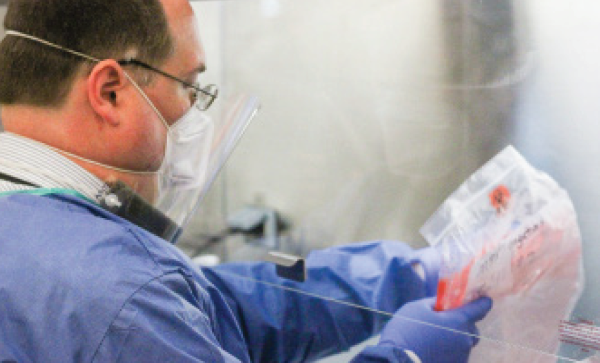 There are many reasons why Ebola is very unlikely to cause a pandemic in the United States. Many African countries have burial practices that promote transmission of the virus. Also, American hospitals have testing, quarantine, and treatment systems that excel at keeping people alive and preventing transmission.
Other Diseases
Other diseases, such as avian influenza, pose greater dangers. Another ongoing threat is from vaccine-preventable diseases, including mumps, measles, and diphtheria. If vaccination rates fall below 95%, these diseases can spread rapidly.
As the immediate threat from COVID-19 recedes, the Minnesota Infectious Disease Laboratory continues to provide the tools and personnel to combat it and any other infectious diseases quickly and effectively.
Return to the main 2023 Annual Report page.