
Secondary menu

  • About Us
  • News & Stories
  • Translated Materials
Minnesota Department of Health logo
  • Data, Statistics, and Legislation

    Data, Statistics, and Legislation

    Statistical reports, health economics, policy, and legislation.
    Data, Statistics, and Legislation
    • Community Health
    • Diseases and Conditions
    • Environmental Health
    • Health Behaviors and Risk Factors
    • Health Care Cost and Quality
    • Reporting and Exchanging Data
    • Legislation and Policy
  • Diseases and Conditions

    Diseases and Conditions

    A-Z disease listing, diseases and conditions by type.
    Diseases and Conditions
  • Health Care Facilities, Providers, and Insurance

    Health Care Facilities and Providers

    Directories of facilities, professional certifications, health insurance and patient safety.
    Health Care Facilities and Providers
    • Facility Certification, Regulation and Licensing
    • Insurance
    • Health Information Technology
    • Provider Certifications, Licenses, Registrations and Rosters
    • Patient Health and Safety
    • Health Care Homes
    • Notices Related to Health Records
    • Rural Health and Primary Care
    • Trauma System
  • Healthy Communities, Environments, and Workplaces

    Healthy Communities, Environments, and Workplaces

    Indoor air and drinking water quality, community prevention and emergency preparedness.
    Healthy Communities, Environments, and Workplaces
    • Community Wellness and Health Equity
    • Healthy Schools and Child Care
    • Healthy Businesses and Workplaces
    • Local Public Health
    • Environments and Your Health
    • Safety and Prevention
    • Emergency Preparedness and Response
    • Equitable Health Care Task Force
    • Transforming the Public Health System in Minnesota
  • Individual and Family Health

    Individual and Family Health

    Birth records, immunizations, nutrition and physical activity.
    Individual and Family Health
    • Vital Records and Certificates
    • Disabilities and Special Health Needs
    • Disease Prevention and Symptom Management
    • Healthy Aging
    • Healthy Children, Youth and Adolescents
    • Mental Health and Well-being
    • Reproductive Rights and Protections in Minnesota
    • Women and Infants
MDH Logo

Breadcrumb

  1. Home
  2. Individual and Family Health
  3. Newborn Screening Program
  4. Newborn Screening Information For Providers
Topic Menu

Newborn Screening

  • Newborn Screening Home
  • Program Information
  • New Conditions
  • Information for Families
  • Information for Providers
  • Materials and Resources
  • Newborn Screening Data
  • Contact Information

Related Topics

  • Public Health Laboratory
  • Children and Youth with Special Health Needs
  • MN Early Hearing Detection and Intervention

Newborn Screening

  • Newborn Screening Home
  • Program Information
  • New Conditions
  • Information for Families
  • Information for Providers
  • Materials and Resources
  • Newborn Screening Data
  • Contact Information

Related Topics

  • Public Health Laboratory
  • Children and Youth with Special Health Needs
  • MN Early Hearing Detection and Intervention
Contact Info
Newborn Screening Program
651-201-5466
800-664-7772 (toll-free)
health.newbornscreening@state.mn.us

Contact Info

Newborn Screening Program
651-201-5466
800-664-7772 (toll-free)
health.newbornscreening@state.mn.us

Newborn Screening Information for Providers:
Hearing Screening Results
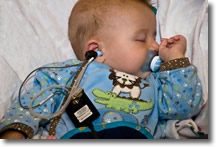
Baby hearing screeningOn this page:
PASS Results
REFER/Did not pass Results
 

PASS results

A "PASS" result means that the newborn exhibited normal hearing function in both ears at the time of the screen. Both ears must pass a single screening to be considered as an overall passing result. Combining passing results in opposite ears on successive screens does not constitute a passing result.

Since hearing loss can occur at any time throughout a person's life, providers should continually monitor the following risk factors in all children who pass the newborn hearing screen:

  • Family history of childhood hearing loss
  • Exposure to infection before or after birth (e.g., cytomegalovirus or bacterial meningitis)
  • Spending more than five days in the neonatal intensive care unit (NICU)
  • Presence of other congenital and/or craniofacial anomalies
  • Exposure to ototoxic medications

Refer/Did not pass results

A "Refer/Did not pass" result means that the newborn did not pass the hearing screen in one or both ears. A Refer/Did not pass result does not definitively mean that the newborn has a hearing loss, but rather that additional testing is needed.

Because newborn hearing screening is not a diagnostic test, some newborns may receive a Refer/Did not pass result but later be found to have normal hearing. Although false positives do occur, it is crucial that all Refer/Did not pass results receive attention and appropriate follow-up in a timely manner. Like all screening tests, newborn hearing screening inherently generates false positive results in order to avoid missing infants with hearing loss.

Providers should take the following action for every Refer/Did not pass result:

  • Review information from the hospital
  • Schedule rescreening or further evaluation by an audiologist as soon as possible (if not already scheduled by birth facility)
  • Contact the family and encourage prompt follow-up
  • If hearing loss is confirmed, refer to early intervention, parent support, and specialty services


Tags
  • newborn screening
Last Updated: 01/30/2025
  • Facebook
  • X
  • Instagram
  • LinkedIn
  • Youtube

About MDH

  • About Us
  • Grants and Loans
  • Advisory Committees

Legal & Accessibility

  • Privacy Policy
  • Equal Opportunity
  • Feedback Form

Careers at MDH

This is an official website of the State of Minnesota. Visit Minnesota.gov for more information.