
Secondary menu

  • About Us
  • News & Stories
  • Translated Materials
Minnesota Department of Health logo
  • Data, Statistics, and Legislation

    Data, Statistics, and Legislation

    Statistical reports, health economics, policy, and legislation.
    Data, Statistics, and Legislation
    • Community Health
    • Diseases and Conditions
    • Environmental Health
    • Health Behaviors and Risk Factors
    • Health Care Cost and Quality
    • Reporting and Exchanging Data
    • Legislation and Policy
  • Diseases and Conditions

    Diseases and Conditions

    A-Z disease listing, diseases and conditions by type.
    Diseases and Conditions
  • Health Care Facilities, Providers, and Insurance

    Health Care Facilities and Providers

    Directories of facilities, professional certifications, health insurance and patient safety.
    Health Care Facilities and Providers
    • Facility Certification, Regulation and Licensing
    • Insurance
    • Health Information Technology
    • Provider Certifications, Licenses, Registrations and Rosters
    • Patient Health and Safety
    • Health Care Homes
    • Notices Related to Health Records
    • Rural Health and Primary Care
    • Trauma System
  • Healthy Communities, Environments, and Workplaces

    Healthy Communities, Environments, and Workplaces

    Indoor air and drinking water quality, community prevention and emergency preparedness.
    Healthy Communities, Environments, and Workplaces
    • Community Wellness and Health Equity
    • Healthy Schools and Child Care
    • Healthy Businesses and Workplaces
    • Local Public Health
    • Environments and Your Health
    • Safety and Prevention
    • Emergency Preparedness and Response
    • Equitable Health Care Task Force
    • Transforming the Public Health System in Minnesota
  • Individual and Family Health

    Individual and Family Health

    Birth records, immunizations, nutrition and physical activity.
    Individual and Family Health
    • Vital Records and Certificates
    • Disabilities and Special Health Needs
    • Disease Prevention and Symptom Management
    • Healthy Aging
    • Healthy Children, Youth and Adolescents
    • Mental Health and Well-being
    • Reproductive Rights and Protections in Minnesota
    • Women and Infants
MDH Logo

Breadcrumb

  1. Home
  2. Individual and Family Health
  3. Hand Hygiene
  4. Why Hand Hygiene Is Important and When To Wash Your Hands
Topic Menu

When and Why: Wash Your Hands

  • When and Why Home
  • Diseases
  • Antibiotic Resistance
  • 5 Common Ways Germs are Spread
  • Germs are Tough
  • When Should I Wash Poster

Hand Hygiene

  • Hand Hygiene Home
  • Soap and Water
  • Hand Sanitizer
  • Why and When
  • Choosing and Using Soap
  • Teaching Hand Hygiene
  • For Schools and Child Care
  • For Food Handlers
  • For Health Care Professionals
  • Posters and Print Materials

Related Topics

  • Food Safety
  • Cover Your Cough
  • Infection Control

When and Why: Wash Your Hands

  • When and Why Home
  • Diseases
  • Antibiotic Resistance
  • 5 Common Ways Germs are Spread
  • Germs are Tough
  • When Should I Wash Poster

Hand Hygiene

  • Hand Hygiene Home
  • Soap and Water
  • Hand Sanitizer
  • Why and When
  • Choosing and Using Soap
  • Teaching Hand Hygiene
  • For Schools and Child Care
  • For Food Handlers
  • For Health Care Professionals
  • Posters and Print Materials

Related Topics

  • Food Safety
  • Cover Your Cough
  • Infection Control
Contact Info
Infectious Disease Epidemiology, Prevention and Control Division
651-201-5414
IDEPC Comment Form

Contact Info

Infectious Disease Epidemiology, Prevention and Control Division
651-201-5414
IDEPC Comment Form

5 Common Ways Germs are Spread

This fun poster teaches about cross contamination.

Download a print version of this document:
5 Common Ways Germs Are Spread (Cross Contamination) Poster (PDF)
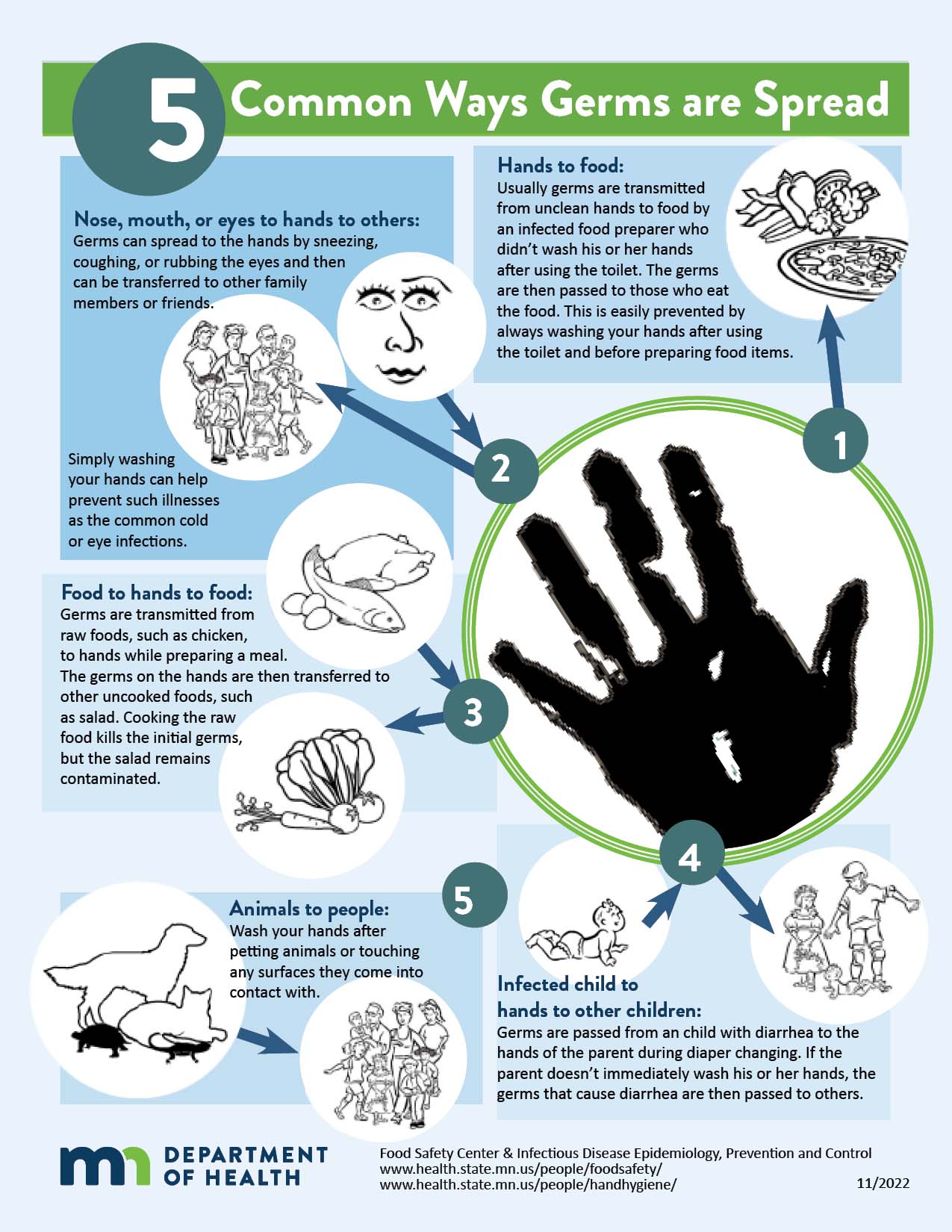
Image of 5 Common Ways Germs Are Spread poster.

Five common ways germs are spread:

  • Nose, mouth, or eyes to hands to others:
    Germs can spread to the hands by sneezing, coughing, or rubbing the eyes and then can be transferred to other family members or friends. Simply washing your hands can help prevent such illnesses as the common cold or eye infections.

  • Hands to food:
    Usually germs are transmitted from unclean hands to food by an infected food preparer who didn’t wash his or her hands after using the toilet. The germs are then passed to those who eat the food. This is easily prevented by always washing your hands after using the toilet and before preparing food items.

  • Food to hands to food:
    Germs are transmitted from raw foods, such as chicken, to hands while preparing a meal. The germs on the hands are then transferred to other uncooked foods, such as salad. Cooking the raw food kills the initial germs, but the salad remains contaminated.

  • Infected child to hands to other children:
    Germs are passed from a child with diarrhea to the hands of the parent during diaper changing. If the parent doesn’t immediately wash his or her hands, the germs that cause diarrhea are then passed to others.

  • Animals to people:
    Wash your hands after petting animals or touching any surfaces they come into contact with.

Tags
  • hand hygiene
Last Updated: 10/04/2022
  • Facebook
  • X
  • Instagram
  • LinkedIn
  • Youtube

About MDH

  • About Us
  • Grants and Loans
  • Advisory Committees

Legal & Accessibility

  • Privacy Policy
  • Equal Opportunity
  • Feedback Form

Careers at MDH

This is an official website of the State of Minnesota. Visit Minnesota.gov for more information.