
Secondary menu

  • About Us
  • News & Stories
  • Translated Materials
Minnesota Department of Health logo
  • Data, Statistics, and Legislation

    Data, Statistics, and Legislation

    Statistical reports, health economics, policy, and legislation.
    Data, Statistics, and Legislation
    • Community Health
    • Diseases and Conditions
    • Environmental Health
    • Health Behaviors and Risk Factors
    • Health Care Cost and Quality
    • Reporting and Exchanging Data
    • Legislation and Policy
  • Diseases and Conditions

    Diseases and Conditions

    A-Z disease listing, diseases and conditions by type.
    Diseases and Conditions
  • Health Care Facilities, Providers, and Insurance

    Health Care Facilities and Providers

    Directories of facilities, professional certifications, health insurance and patient safety.
    Health Care Facilities and Providers
    • Facility Certification, Regulation and Licensing
    • Insurance
    • Health Information Technology
    • Provider Certifications, Licenses, Registrations and Rosters
    • Patient Health and Safety
    • Health Care Homes
    • Notices Related to Health Records
    • Rural Health and Primary Care
    • Trauma System
  • Healthy Communities, Environments, and Workplaces

    Healthy Communities, Environments, and Workplaces

    Indoor air and drinking water quality, community prevention and emergency preparedness.
    Healthy Communities, Environments, and Workplaces
    • Community Wellness and Health Equity
    • Healthy Schools and Child Care
    • Healthy Businesses and Workplaces
    • Local Public Health
    • Environments and Your Health
    • Safety and Prevention
    • Emergency Preparedness and Response
    • Equitable Health Care Task Force
    • Transforming the Public Health System in Minnesota
  • Individual and Family Health

    Individual and Family Health

    Birth records, immunizations, nutrition and physical activity.
    Individual and Family Health
    • Vital Records and Certificates
    • Disabilities and Special Health Needs
    • Disease Prevention and Symptom Management
    • Healthy Aging
    • Healthy Children, Youth and Adolescents
    • Mental Health and Well-being
    • Reproductive Rights and Protections in Minnesota
    • Women and Infants
MDH Logo

Breadcrumb

  1. Home
  2. Diseases and Conditions
  3. Tuberculosis (TB)
  4. TB Fact Sheets
Topic Menu

Tuberculosis

  • TB Home
  • TB Basics
  • For Health Care Professionals
  • For Local Public Health
  • TB Statistics
  • TB Guidelines and Recommendations A to Z
  • Prevention and Control in Health Care and Congregate Settings
  • TB Medications Program
  • TB Prevention and Control Program

Related Sites

  • Infectious Diseases A-Z
  • Reportable Infectious Diseases
  • STD/HIV/TB Data and Presentation Request

Tuberculosis

  • TB Home
  • TB Basics
  • For Health Care Professionals
  • For Local Public Health
  • TB Statistics
  • TB Guidelines and Recommendations A to Z
  • Prevention and Control in Health Care and Congregate Settings
  • TB Medications Program
  • TB Prevention and Control Program

Related Sites

  • Infectious Diseases A-Z
  • Reportable Infectious Diseases
  • STD/HIV/TB Data and Presentation Request
Contact Info
Infectious Disease Epidemiology, Prevention and Control Division
651-201-5414
IDEPC Comment Form

Contact Info

Infectious Disease Epidemiology, Prevention and Control Division
651-201-5414
IDEPC Comment Form

The TB (Tuberculosis) Skin Test (Mantoux)

This fact sheet gives information about how the skin test is given and read, and what the results mean.

On this page:
What is latent TB infection?
How can I tell if I have latent TB infection?
How do I take care of my arm after the TB skin test?
What if my TB skin test is negative?
What if my TB skin test is positive?
You should have a TB skin test if:
What if I've had BCG vaccine?

  • Download PDF version formatted for print:
    TB Skin Test (Mantoux) (PDF)
    • Amharic (PDF)
    • Arabic (PDF)
    • Bosnian/Croatian/Serbian (PDF)
    • Hmong (PDF)
    • Karen (PDF)
    • Khmer (Cambodian) (PDF)
    • Laotian (PDF)
    • Oromo (PDF)
    • Russian (PDF)
    • Somali (PDF)
    • Spanish (PDF)
    • Tibetan (PDF)
    • Vietnamese (PDF)

The tuberculosis (TB) skin test, sometimes called a "Mantoux," is a simple, harmless way to find out if you have latent TB infection.
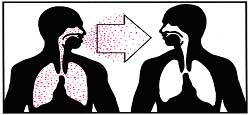
graphic of active TB

What is latent TB infection?

There are two phases of TB. Both phases can be treated with medicine. When TB germs first enter your body, they cause latent TB infection. Without treatment, latent TB infection can become active TB disease. Anyone can get TB because it spreads from one person to another through the air.

Phase 1 – Latent TB Infection Phase 2 – Active TB Disease
TB germs are “asleep” in your body. This phase can last for a very long time – even many years. TB germs are active and spreading. They are damaging tissue in your body.
You don’t look or feel sick. Your chest x-ray is usually normal. You usually feel sick. Your doctor will do special tests to find where TB is harming your body.
You can't spread TB to other people. If the TB germs are in your lungs, you can spread TB to other people by coughing, sneezing, talking, or singing.

Usually treated by taking one medicine for 9 months.
Treated by taking 3 or 4 medicines for at least 6 months.

How can I tell if I have latent TB infection?

A TB skin test ("Mantoux") can show if you have latent TB infection. You could have latent TB infection if you have ever spent time close to someone with active TB disease (even if you didn't know they were sick). Your health care provider will use a small needle to inject some harmless testing fluid (called "tuberculin") under the skin on your arm.
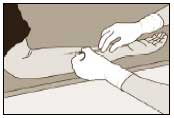
graphic of skin test for TB

Your health care provider MUST check your arm 2 or 3 days after the TB skin test, even if your arm looks OK to you.

If you have a reaction to the test, it will look like a raised bump. Your health care provider will measure the size of the reaction. If there is a bump, it will go away in a few weeks.

How do I take care of my arm after the TB skin test?

  • Don't cover the spot with a bandage or tape.
  • Be careful not to rub it or scratch it.
  • If the spot itches, put a cold cloth on it.
  • You can wash your arm and dry it gently.
Don't be afraid to be tested. TB can be cured!

What if my TB skin test is negative?

The test is "negative" if there is no bump (or only a very small bump) at the spot where the fluid was injected. A negative TB skin test usually means that you don't have TB.

In some situations, you may need to have another TB skin test later.

What if my TB skin test is positive?

The test is "positive" if there is a bump of a certain size where the fluid was injected. This means you probably have TB germs in your body. Most people with a positive TB skin test have latent TB infection. To be sure, your doctor will examine you and give you a chest x-ray. You may need other tests to see if you have active TB disease.

Protect your health and the health of your family - get a TB skin test!
To get a TB skin test, contact your doctor or your public health department.

You should have a TB skin test if:

  • you have had frequent close contact with someone who has active TB disease,
  • you have lived in a country where many people have TB,
  • you work or live in a nursing home, clinic, hospital, prison, or homeless shelter, or
  • you have HIV infection or certain other health problems.

What if I've had BCG vaccine?

Even if you have had BCG vaccine, you can have a TB skin test.

  • People who have had BCG vaccine still can get latent TB infection and active TB disease.
  • BCG vaccine may help protect young children from getting very sick with TB. This protection goes away as people get older.
  • BCG vaccine sometimes causes a positive TB skin test reaction. But if you have a positive reaction to the TB skin test, it probably is from TB germs in your body - not from your BCG vaccine.
You can have a TB skin test, even if you have had BCG vaccine!
Tags
  • tb
Last Updated: 11/14/2022
  • Facebook
  • X
  • Instagram
  • LinkedIn
  • Youtube

About MDH

  • About Us
  • Grants and Loans
  • Advisory Committees

Legal & Accessibility

  • Privacy Policy
  • Equal Opportunity
  • Feedback Form

Careers at MDH

This is an official website of the State of Minnesota. Visit Minnesota.gov for more information.