
Contact Info
Treatment for Latent TB Infection (LTBI)
This fact sheet contains information about how latent TB infection (LTBI) is treated and how active TB disease can be prevented.
On this page:
How can I prevent active TB disease?
Why should I take medicine if I don't feel sick?
What should I know about medicine for LTBI?
What happens if I don't take the medicine?
What should I do if I've had a BCG vaccine?
What if I can't afford to pay for the pills?
What if I move away?
How can I remember to take my TB medicine?
Download PDF version formatted for print:
Treatment of Latent TB Infection - English (PDF)
- Amharic (PDF)
- Arabic (PDF)
- Bosnian/Croatian/Serbian (PDF)
- French (PDF)
- Hmong (PDF)
- Karen (PDF)
- Khmer (Cambodian) (PDF)
- Laotian (PDF)
- Nepali (PDF)
- Oromo (PDF)
- Russian (PDF)
- Somali (PDF)
- Spanish (PDF)
- Tibetan (PDF)
- Vietnamese (PDF)
Your tests show that you have latent TB infection, or "LTBI." A small number of TB germs have spread to many parts of your body, such as your lungs, bones, or kidneys.
The TB germs are not hurting you now. They are "asleep" but they are still alive. The TB germs will "sleep" as long as your body can fight them off. When you have LTBI you can't spread TB to others.
If your body stops fighting off the TB germs, they will "wake up" and start to grow. This can happen to anyone with LTBI at any time. When the germs grow and spread it is called "active TB disease." People with active TB disease can get very sick and can spread TB to other people.
How can I prevent active TB disease?
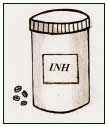
There are medicines you can take to prevent you from getting active TB disease. Isoniazid (INH) is a common medicine used to treat LTBI. INH kills the "sleeping" TB germs before they have a chance to make you sick. Because the TB germs are strong, it takes many months for the medicine to kill them.
INH works best if you take it every day until your doctor says it is OK to stop. Take your INH without food.
You should see your health care provider once a month while you are taking INH, to make sure your treatment is going well.
Why should I take medicine if I don't feel sick?
INH kills the TB germs in your body before they have a chance to "wake up" and make you sick. Remember, TB germs are easier to kill while they are still "asleep."
What should I know about medicine for LTBI?
Many people take INH every day without any problems, but there are a few things you should watch for:
- Fever for more than three days
- Poor appetite, losing weight, or feeling tired for no reason
- Nausea or vomiting:
- Some people have mild nausea when they begin taking INH pills. If this happens to you, try eating a small amount of food with your pill or take it at bedtime. If you are still nauseated after three days, call your clinic right away.
- Pain in your abdomen
- Dark urine (tea or coffee color)
- Yellow skin or eyes
- Skin rash or itching
- Numb or tingling feeling in your hands or feet
- Coughing for more than three weeks
- Sweating at night
If you have any of these problems, call your clinic right away – don't wait for your next appointment.
Other important points:
- Drinking alcohol while you take INH can hurt your liver. Don't drink beer, wine, or liquor until you finish your LTBI treatment.
- Be sure to tell your doctor if you are taking any other medicine or if you are pregnant.
What happens if I don't take the medicine?
If you don't take INH or if you stop taking your pills too soon, you could become sick with active TB disease. This can happen to anyone with LTBI at any time. Don't wait for this to happen to you and your family!
What should I do if I've had a BCG vaccine?
In countries where TB is common, many people have a vaccine called BCG. BCG can protect children from TB, but it lasts only a few years.
People who had BCG can get active TB disease! If you've had BCG, you can still protect yourself by taking medicine for LTBI.
What if I can't afford to pay for the pills?
Ask your doctor or nurse about getting free TB medicine from the Minnesota Department of Health.
What if I move away?
If you move to another state or city, tell your health care provider before you move. They can help make sure that you get your TB medicine after you move.
take all of your TB medicine!
How can I remember to take my TB medicine?
It is very important to take your INH every day. If you miss too many days the medicine might not work. Keep taking it until your doctor says it is OK to stop.
Some ways to help you remember:
- Keep your pills in a place where you will see them every day.
- Ask a family member or friend to remind you every day.
- Mark your calendar every day after you take your pill.
- Use a pill reminder box.
- Take your pill at the same time every day. For example, after you brush your teeth, eat breakfast, or just before you go to sleep.
If you miss any days, write them down so you can tell your doctor or nurse at your next check-up.