
Clean Water Fund: Source Water Protection
MDH Legacy Initiatives
- Clean Water Fund Home
- Contaminants of
Emerging Concern - Groundwater Protection Initiative - Accelerated Implementation Grant
- Groundwater Restoration and Protection Strategies (GRAPS)
- Pathogen Project
- Private Well Protection
- Source Water Protection Planning and Grants
- Water Reuse
Related Topics
- Minnesota Well Index
- Drinking Water Protection
- Source Water Protection
- Health Risk Assessment
- Wells and Borings
Environmental Health Division
Groundwater Restoration and Protection Strategies (GRAPS)
Clean Water Fund
Minnesota Department of Health coordinates the Groundwater Restoration and Protection Strategies (GRAPS) program. Many state agencies work together to gather data and create GRAPS reports for each watershed in Minnesota.
GRAPS reports contain maps and data describing groundwater conditions in the watershed. The reports identify local groundwater concerns and outline strategies and programs to address them. Local organizations can use GRAPS reports to develop their water management plans.
GRAPS reports and activities by watershed
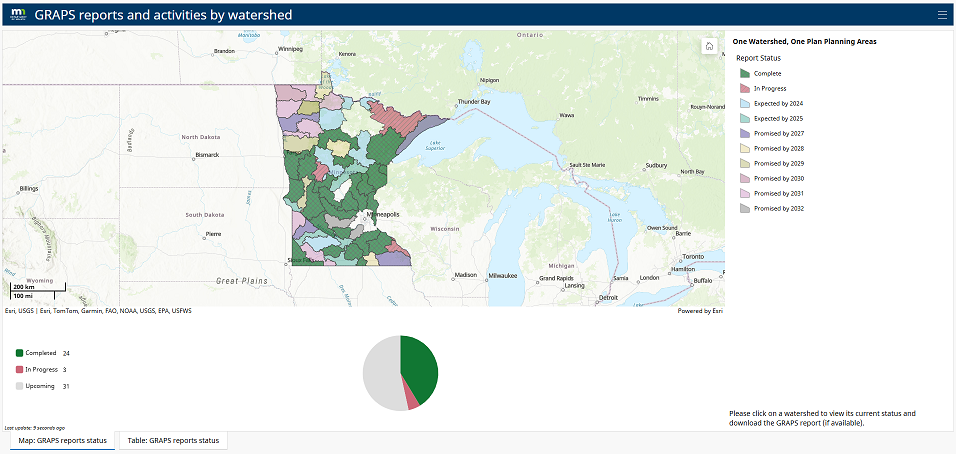
Our Interactive GRAPS Report Dashboard shows the status of the One Watershed, One Plan GRAPS Reports by watershed. In the table, you can view and download individual GRAPS reports.
More information about GRAPS reports
Groundwater Restoration and Protection Strategies (GRAPS) reports are designed to help prioritize local planning efforts to protect and restore groundwater resources. A GRAPS report identifies key groundwater quality and quantity concerns using existing data and information about groundwater and land-use practices in the watershed. The report also suggests targeted strategies to restore and protect groundwater.
The report is divided into the following parts:
- Watershed Overview: This section provides a brief overview of the watershed and groundwater resources.
- Watershed Groundwater Issues and Concerns: This section highlights the main groundwater quality and quantity concerns, where concerns occur within the watershed, and ways to address them.
- Watershed Strategies and Actions to Protect and Restore Groundwater: This section provides tips for prioritizing and targeting restoration and protection strategies, makes suggestions about what strategies and actions would be most appropriate in which counties and subwatersheds, and provides information about existing programs and resources for each strategy.
- Making Sense of the Regulatory Environment: This section provides an overview of the roles that State agencies have in managing groundwater and drinking water.
- Appendices:The appendices provide supporting information about the GRAPS document.
The GRAPS report is a resource for developing local water management plans. The report is divided into six parts to accommodate different needs and information partners may seek. This report is not necessarily designed to be read cover to cover. Rather, you can review the parts that are most helpful.
If you are accessing this document electronically, you can click on hyperlinks throughout the report to move to different parts of the report and access webpages. All hyperlinks are in blue font.
The State of Minnesota adopted a watershed approach to address the state’s 81 major watersheds. This watershed approach incorporates water quality assessment, watershed analysis, civic engagement, planning, implementation, and measurement of results into a 10-year cycle that addresses both watershed restoration and protection.
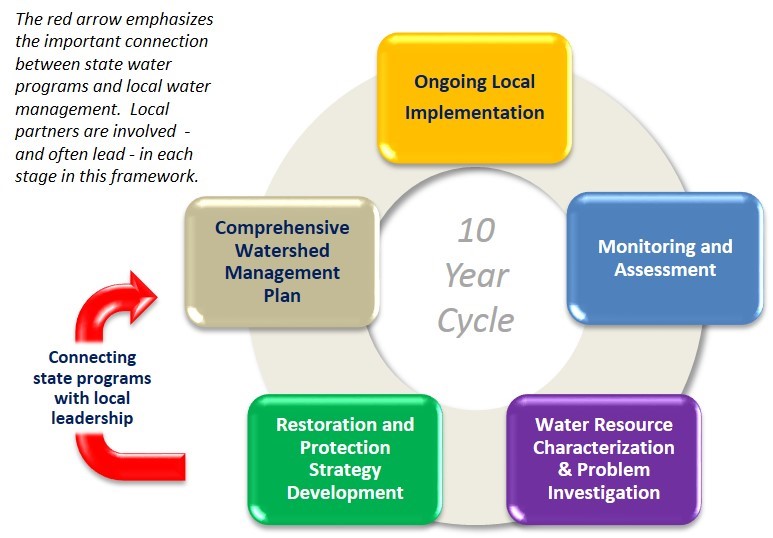
GRAPS reports are meant to be used with Watershed Restoration and Protection Strategies (WRAPS) reports in the development of local watershed management plans. WRAPS inform how to restore and protect surface water, and GRAPS inform how to restore and protect groundwater in the same geographical area.
WRAPS focus on restoration and begin with intensive monitoring to evaluate surface water quality. WRAPS identify the necessary actions and time frame to restore surface water quality. However, if there is groundwater overuse or contamination in the watershed, the strategies identified can also help restore groundwater.
Local organizations can also use GRAPS reports in their One Watershed, One Plan (1W1P) development. The 1W1P program will provide local governments with a single management plan for groundwater and surface water. A number of Minnesota state agency programs will feed into the 1W1P program, including GRAPS.
MDH commissioned the Freshwater Society to conduct a study to inform GRAPS and local implementation efforts. The Freshwater Society asked Minnesota’s local water resource professionals what barriers they face in protecting drinking water sources and for potential solutions. Study results and Freshwater Society recommendations are included in the 2016 report Protecting groundwater-sourced drinking water: An assessment of the needs and barriers faced by local water management professionals (PDF).
Of interest
- Clean Water Fund
- One Watershed One Plan
- Watershed information
- Groundwater Province Areas
- Watershed Restoration Protection Strategy
Go to > top