
2023 Public Health Laboratory Annual Report
PFAS: First New Drinking Water Contaminant Since 1996
Minnesota led the way, tracking PFAS for decades
For more than 20 years, the Environmental Laboratory has analyzed soil and water for a class of human-made chemicals called per- and polyfluoroalkyl substances (PFAS). PFAS are nearly ubiquitous in consumer products, especially in cosmetics, non-stick cookware, and coatings on food packaging. They are known as “forever chemicals” because they take millions of years to decompose. Once ingested, PFAS take years to flush out of the body.
The Minnesota Public Health Laboratory and the Minnesota Pollution Control Agency have been monitoring PFAS since 2002. In the last decade, the Environmental Protection Agency (EPA) has been establishing regulations for monitoring and controlling the spread of PFAS. It is the first time since 1996 that any new chemicals have been proposed as a newly regulated drinking water contaminant.
Specifically, six out of the thousands of analytes of PFAS have been chosen for regulation. Researchers are actively studying the health effects of these six analytes, but early conclusions are worrying. Two analytes, PFOA and PFOS, are known to be carcinogens. Manufacturers have mostly phased PFOA and PFOS out of new products, but the existing compounds persist in the environment and can accumulate to dangerous levels. Other varieties of PFAS remain central to manufacturing.
Measuring, Analyzing, and Monitoring for PFAS
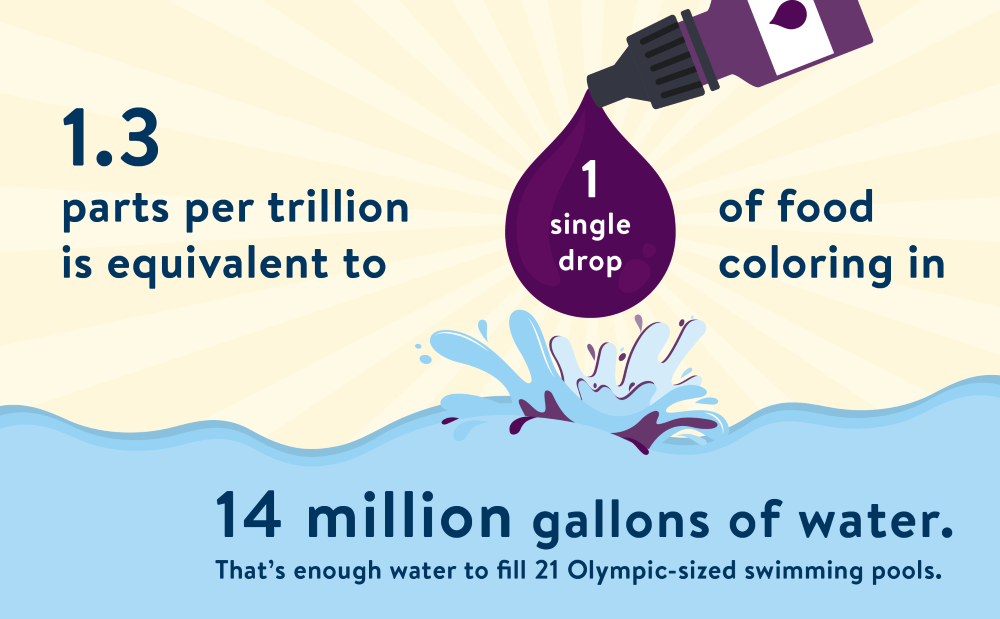
The EPA has designed a contamination and regulation action plan. Under the proposed drinking water regulations, if drinking water samples for an area show PFOA and/or PFOS above 1.3 parts per trillion, the Environmental Laboratory and its sampling partners will increase monitoring of the site. If the rate gets above 4 parts per trillion, a filtration system will be installed in the area’s water treatment plants to remove the PFAS particles. Water-treatment plants will treat the PFAS it collects as hazardous waste.
Another initiative involves testing fish for PFAS. This is a primary method for checking contamination in lakes, streams, and other non-potable water sources. Water samples are also taken from such sources, and from wells near landfills. The Public Health Laboratory partners with the Minnesota Pollution Control Agency in this effort; visit Pollution Control’s pages on PFAS.
Testing for PFAS Occurring Around the State
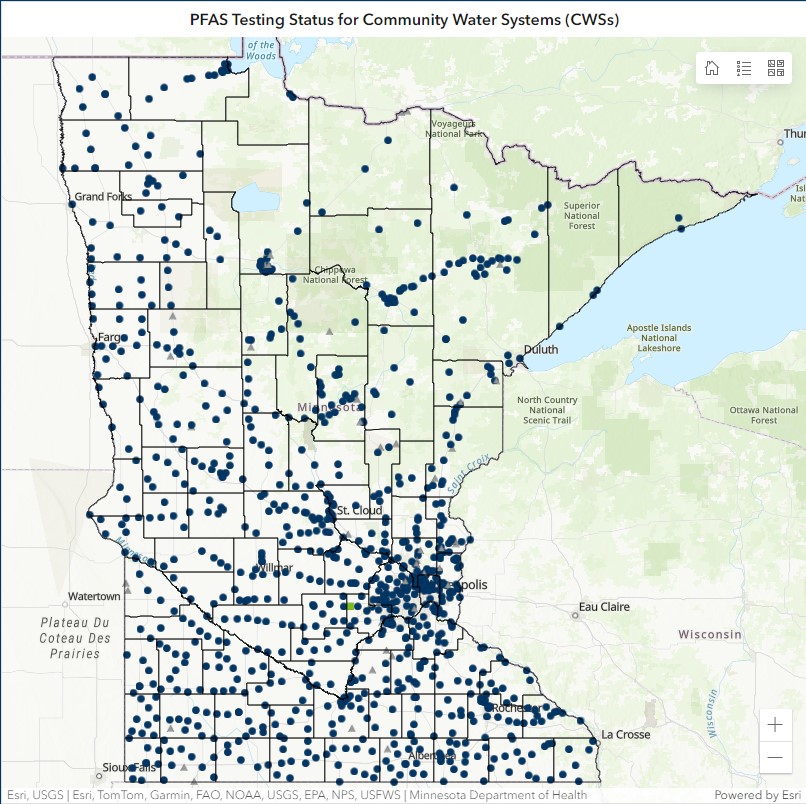 The number of geographical areas of Minnesota being sampled is rapidly expanding. Previously, the East Metro of Minneapolis/Saint Paul was of primary concern for PFAS contamination. Now sampling is rolling out across every corner of the state. See our interactive dashboard for PFAS testing.
Currently, around 50 sample submissions arrive at the Environmental Laboratory each week, but that number is expected to grow. Three staff members and three lab instruments are devoted to checking drinking water for PFAS. Two additional staff members are working on related biomonitoring projects.
As with so many major health concerns, the Public Health Laboratory is collecting vital information about PFAS in our environment. The recent expansion of this work strengthens our national effort to understand and combat the threat.
Return to the main 2023 Annual Report page.