Secondary menu

  • About Us
  • News & Stories
  • Translated Materials
Minnesota Department of Health logo
  • Data, Statistics, and Legislation

    Data, Statistics, and Legislation

    Statistical reports, health economics, policy, and legislation.
    Data, Statistics, and Legislation
    • Community Health
    • Diseases and Conditions
    • Environmental Health
    • Health Behaviors and Risk Factors
    • Health Care Cost and Quality
    • Reporting and Exchanging Data
    • Legislation and Policy
  • Diseases and Conditions

    Diseases and Conditions

    A-Z disease listing, diseases and conditions by type.
    Diseases and Conditions
  • Health Care Facilities, Providers, and Insurance

    Health Care Facilities and Providers

    Directories of facilities, professional certifications, health insurance and patient safety.
    Health Care Facilities and Providers
    • Facility Certification, Regulation and Licensing
    • Insurance
    • Health Information Technology
    • Provider Certifications, Licenses, Registrations and Rosters
    • Patient Health and Safety
    • Health Care Homes
    • Notices Related to Health Records
    • Rural Health and Primary Care
    • Trauma System
  • Healthy Communities, Environments, and Workplaces

    Healthy Communities, Environments, and Workplaces

    Indoor air and drinking water quality, community prevention and emergency preparedness.
    Healthy Communities, Environments, and Workplaces
    • Community Wellness and Health Equity
    • Healthy Schools and Child Care
    • Healthy Businesses and Workplaces
    • Local Public Health
    • Environments and Your Health
    • Safety and Prevention
    • Emergency Preparedness and Response
    • Equitable Health Care Task Force
    • Transforming the Public Health System in Minnesota
  • Individual and Family Health

    Individual and Family Health

    Birth records, immunizations, nutrition and physical activity.
    Individual and Family Health
    • Vital Records and Certificates
    • Disabilities and Special Health Needs
    • Disease Prevention and Symptom Management
    • Healthy Aging
    • Healthy Children, Youth and Adolescents
    • Mental Health and Well-being
    • Reproductive Rights and Protections in Minnesota
    • Women and Infants
MDH Logo

Breadcrumb

  1. Home
  2. Diseases and Conditions
  3. Diseases and Conditions Identified In Children
Topic Menu

Children and Youth with Special Health Needs (CYSHN)

  • CYSHN Home
  • About CYSHN
  • Information and Resources
  • Diseases and Conditions

Programs

  • Birth Defects Monitoring and Analysis
  • Early Hearing Detection and Intervention
  • Follow Along Program
  • Longitudinal Follow-up for Newborn Screening Conditions

Children and Youth with Special Health Needs (CYSHN)

  • CYSHN Home
  • About CYSHN
  • Information and Resources
  • Diseases and Conditions

Programs

  • Birth Defects Monitoring and Analysis
  • Early Hearing Detection and Intervention
  • Follow Along Program
  • Longitudinal Follow-up for Newborn Screening Conditions
Contact Info
Children and Youth with Special Health Needs
651-201-3650
800-728-5420 (toll-free)
health.cyshn@state.mn.us

Contact Info

Children and Youth with Special Health Needs
651-201-3650
800-728-5420 (toll-free)
health.cyshn@state.mn.us

Congenital Adrenal Hyperplasia (CAH)

Congenital adrenal hyperplasia (CAH) is an inherited condition that affects the body's adrenal glands, which are the cone-shaped organs that sit on top of the kidneys. In a person with CAH, the adrenal glands are very large and are unable to produce certain chemicals, including cortisol, a chemical that helps protect the body during stress or illness and helps the body regulate the amount of sugar in the blood. Left untreated, the adrenal glands produce too much of chemicals called androgen, which produce male sex traits. The signs of congenital adrenal hyperplasia (CAH) vary from person to person and by the form of CAH. There are three main forms of CAH: the “salt-wasting form," the “simple virilizing form," and non-classic CAH. Salt-wasting classic CAH accounts for about 75% of classic CAH cases. This is the most severe form. The simple virilizing type of classic CAH accounts for about 25% of classic CAH cases. This form is less severe than salt-wasting CAH, but more severe than non-classic CAH. Signs of simple virilizing and salt wasting CAH begin before birth. These signs differ between males and females. Early detection and treatment can help children with CAH to have healthy development.

For more information about congenital adrenal hyperplasia, see the Parent Handbook: Congenital Adrenal Hyperplasia in the Newborn (PDF).

I'm Growing with CAH!

A children's book made for children growing up with CAH.
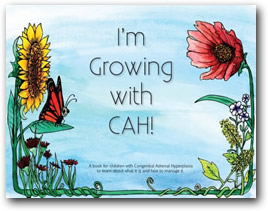
I'm Growing with CAH! Book Cover

...I am meeting with his pre-school teacher next week before school starts, and I will show her the book to help me explain CAH!"

Read the book online or print at home (PDF)

Check out these cool kids!
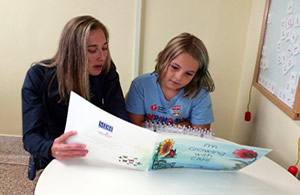
Ann reading with Ashley Ann, a child life specialist, reading with Ashley.
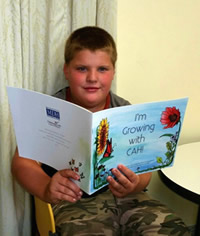
Gabriel reads his book in clinic! Gabriel reading
Shaelyn reading Shaelyn reads her book at home!
Take it with you on the go! Young Girl in a stroller taking the book on the go
Young boy sharing the book

Would you like to share a photo of your child using the book? Send it to us, with a signed photo release form (PDF)!

Tags
  • congenital adrenal hyperplasia
Last Updated: 09/06/2024
  • Facebook
  • X
  • Instagram
  • LinkedIn
  • Youtube

About MDH

  • About Us
  • Grants and Loans
  • Advisory Committees

Legal & Accessibility

  • Privacy Policy
  • Equal Opportunity
  • Feedback Form

Careers at MDH

This is an official website of the State of Minnesota. Visit Minnesota.gov for more information.